
Dec 23, 2025 | Barber FAQs, Men’s Grooming Tips
A well-grown mustache will never go out of style. Whether it is a chic chevron, a dashing pencil, or a hearty handlebar, facial hair is making a huge revival in men’s grooming culture. At our grooming salon at First & Mane, men of all kinds come in with a newfound love for the ‘stache, and they see it not just as facial hair, but an expression of their personal style.
If you would like personalized advice on any aspect of mustache grooming, contact us for expert guidance. Of course, sometimes things go awfully wrong. Perhaps a haircut went sour, or perhaps you shaved yours off in a moment of madness, and an instant regret followed. Now, you are left staring into the mirror, wondering how soon your upper lip will recover.
Well, to cut a long story short, how long does it take to grow a mustache? Facial hair grows at an average speed of half an inch every month. However, to get back to your pre-shaving glory, you have to focus on more than just waiting for time to pass.
Factors Influencing Mustache Development
Every man does not have an equal rate of hair growth. The main influence on this is your genes. If your lineage can grow a thick beard over a weekend, you have every chance of getting a thick mustache. But if your lineage grows in a patchy manner, you will have to be very patient.
Age is another important consideration. A man will notice peak facial hair production during his 25th to 35th year because this is when levels of testosterone, a hormone which activates hair follicles, are at their peak. Your personal health is another thing to consider. When your body is well-rested and well-nourished, it will have extra energy to devote to non-essential functions such as hair production.
Growing a Mustache – Stages
The process of regrowing a mustache takes time and progresses in different mustache growth stages. The first stage is referred to as the “stubble stage” which takes place in the first few days of growing a mustache. During this stage, hair is at its shortest and can appear prickly or itchy.
Then comes the awkward stage, which will likely be at week two. Here, your hair will be a bit longer but may not be lying flat in one particular direction yet. In this stage, you might notice a bit of a messy look, and this is where most guys will be tempted to start shaving all over again.
Then, finally, after four to six weeks, you will reach the fill in stage. Your mustache will start to appear thick and purposeful. This is an important milestone in the mustache growth timeline, as it allows you to have sufficient length to style your mustache as you want.
Tips to Encourage Growth
Although you can’t do anything to your genes, we always advise our clients to make their environment conducive for growth. Let’s talk about diet. Foods high in protein, biotin, and vitamins A, C, and E promote keratin production, which is hair’s building blocks.
Grooming practices also matter. Taking good care of your skin underneath your mustache can help you avoid ingrown hairs, which can hinder your progress. Applying a good quality beard oil from your stage of stubble can help you keep your skin hydrated, and you will avoid the itchiness which can cause most men to stop.
Common Mistakes to Avoid
The most common error people make is over-trimming in the early growing phases. To try to style a mustache before it gets a chance to fill in will just give you patchy lines or bald spots, and you’ll have to start all over. Just let it grow wild for a month before you do anything else.
The other mistake you can make is not taking your skin into consideration. Dry and scaly skin can impede your follicles from functioning properly. Refrain from using harsh soap on your facial skin since it will remove your natural oils.
Applying Lessons
To grow a mustache back takes patience, biology, and proper maintenance. Although a typical growth rate is rather standard, your individual time frame will greatly depend on how well you take care of your body and your facial hair. Perhaps you are dealing with the awkward stage, or perhaps you need tips on how to style it when it fills in. Either way, come visit First & Mane!
Dru Meskan is the owner and master barber at First & Mane in Scottsdale, Arizona. With 19 years of haircutting experience, including 11 years as a professional barber, Dru is known for precision cuts, modern grooming techniques, and personalized service that keeps clients looking and feeling their best.

Aug 1, 2025 | Barber FAQs, Blog
Walk down any American street, and you can’t help but notice that familiar red, white, and blue striped pole spinning in front of a barber shop. That iconic symbol has led customers towards haircuts and shaves for decades, but its origins tell a much more epic story than you might imagine, especially for those curious about barber pole history.
The origins of the barber pole date far beyond mere hair needs, linking to medieval medicine, ancient practices, even life-or-death operations. So, why do barber shops have the swirly thing? To trace such a symbol’s history is to gain a glimpse of how radically barbering changed over the ages. So, let’s travel back to the past to explore a history that impacts us at First and Mane just as much as every other barber shop!
Origins During Medieval Period
The barber shop pole history had its roots in medieval Europe, where barbers did a lot more than trimming hair. Barbers in medieval Europe were surgeon-barbers, performing medical tasks ranging from tooth pulling to limb amputation. Most notably, they were practitioners of bloodletting – a medical practice grounded in theories positing that removal of blood would cure a host of diseases.
It entailed cutting tiny gashes in patients’ arms or applying leeches to extract blood. Patients held a pole firmly in their grasp while it was performed in order to induce blood flow, while clean bandages were prepared around the pole in advance and blood-soaked ones were hung out for drying later. White fluttering bandages adjacent to red-stained pieces of cloth around a wooden pole became today’s earliest form of barber pole.
The practice wasn’t just common – it was essential healthcare for the time. Barber-surgeons held respected positions in their communities, and their distinctive pole served as both advertisement and medical symbol – much like the ‘swirly thing’ outside a barber shop attracts attention today.
Colors and Their Symbolism
Each of the colors on the traditional barber pole carries specific historical significance. Red stripes represented blood in medical procedures, while white indicated fresh bandages used in treatments. The pole itself made of wood represented the patient’s stick during bloodlettings.
The inclusion of blue stripes is a curious anecdote concerning geography and regulation. When blue was included in European nations in order to indicate barber-surgeons qualified in performing surgery as opposed to those only qualified in basic treatments, when the symbol traveled across to America it gained a patriotic interpretation in which it included American flag colors.
Some areas adopted variations – British barber poles are commonly found with only red and white, while French variants are occasionally plated with gold stripes. These variations indicate local practices and regulatory differences between cosmetic and medical services.
Evolution Over the Centuries
As medical science changed, the barbering profession changed drastically. Barbers were isolated from surgical procedures in the 18th and 19th centuries, when professionally qualified doctors took control over medical procedures. It thus transformed the barber pole completely from a medical symbol into a mere grooming advertisement.
The industrial age introduced motorized forms of the original pole, developing our modern-day spinning motion. Electric currents meant the stripes could produce an optical illusion of constant downward or upward movement for greater visual appeal for would-be customers. That’s why the barber pole spins so enticingly today.
The contemporary barber pole retains its classic look while performing a totally different function. Barbers today do not concentrate solely on hair cutting, styling, and shaving, but they still retain the historical sign which links their profession with its great past. If you ever visit a top-rated barber shop in Scottsdale, AZ, you’re likely to spot this timeless symbol proudly displayed at the entrance.
A Symbol That Persists
Barber pole’s evolution from medieval medical device to contemporary company sign shows how symbols can survive their original intent while maintaining cultural relevance. From its humble practical use as an advertisement for life-saving medical care, it evolved into an indelible sign of individual grooming as well as community congregation.
Next time you glimpse that old familiar whirling pole, you’ll recognize it symbolizes a heritage of centuries, a medical past, and a development in professional service. The barber pole is a witness to how our heritage is intertwined with contemporary symbols we so rarely recognize. If you have any other questions, ask our team at First and Mane!
Dru Meskan is the owner and master barber at First & Mane in Scottsdale, Arizona. With 19 years of haircutting experience, including 11 years as a professional barber, Dru is known for precision cuts, modern grooming techniques, and personalized service that keeps clients looking and feeling their best.

Jun 30, 2025 | Barber FAQs, Beard Maintenance
Beards have been a fashion statement and a symbol of masculinity for hundreds of years, yet they are not as low-maintenance as they appear to be. If you’ve been pacing back and forth in front of the shelves at the neighborhood beauty supply shop, then you’ve likely seen beard oil. Guaranteed to be essential for every man with a beard, some say that they can actually encourage your beard to grow more. Does beard oil help your beard grow? We’ll talk about beard oil today and if it really grows your beard or if it does something else.
Does Beard Oil Assist With Growth?
To answer the million-dollar question right off the bat: no, beard oil will not give you a beard. The notion that applying beard oil somehow magically will make new hairs sprout is pure myth. Does beard oil help growth? The answer is rooted in biology. Beard growth is genetic, hormonal, age-based, and health-based—not a function of what you apply to your face.
Biologically, hair follicles responsible for the beard are regulated by testosterone and its more powerful byproduct, dihydrotestosterone (DHT). A product such as beard oil is not going to interfere with the biological process, so it is not going to perform miracles to fill in patchy spots or make your hair grow faster.
All things being equal, beard oil cannot be discounted. It is not a growth stimulator, perhaps, but it is included in the process of beard care, and that can be the perfect condition where growth can follow through.
How Beard Oil Indirectly Encourages Growth
Although the beard oil is not directly creating new growth, it is assisting indirectly by removing the common issues that could be preventing growth.
Moisturizes the Skin
One of the greatest benefits of beard oil is that it can moisturize the typically dry skin beneath your beard. Dry skin equals itchiness, flakiness, and beard dandruff (or “beardruff”). With healthy, smooth skin, you’re providing your beard hair with a healthier platform to grow from.
Beard oil usually offers carrier oils like argan, jojoba, or almond oil that are the same as the natural oils your skin produces. They moisturize all of it so you don’t experience dryness and itchiness that will make you shave the whole thing off with the razor. If you’re serious about taking care of your beard, you may want to book your appointment with a professional barber to keep it in optimal shape.
Prevents Breakage
Just as the hair on your head, your beard hairs are also prone to breakage, particularly if they are brittle. Broken hairs thin out your beard and discourage further noticeable growth. Beard oils usually contain moisturizing properties that fortify the hair shaft so that it will be less prone to having split ends or breaking off.
A healthy beard will also not split as much and will be able to grow to its full length, which also helps with the appearance of growth. Use beard oil to promote growth by keeping your beard hydrated and strong.
Reduces Skin Redness and Inflammation
If you’ve ever experienced the annoyance of bumps or redness under your beard, inflammation is to blame. Some of the oils contained within beard oil, like tea tree or eucalyptus, contain anti-inflammatory agents that calm irritated skin. By warding off inflammation, beard oil allows the hair follicles a cleaner, healthier area to do what they were designed to do without blockage or irritation.
Although it will not grow new hair, a content and relaxed base encourages healthier growth throughout the rest of your beard. In the long run, using beard oil for growth can make a noticeable difference.
The Final Choice Between Beard Oil and Growth
Beard oil is not a beard-growing miracle serum, nor are its virtues merely cosmetic. It moisturizes skin, conditions hair, and calms irritation, so your beard can, in the long run, be healthier and fuller-looking. Beard grooming is a marathon, not a sprint, and a healthy, well-groomed beard will always outshine a scrawny one, regardless of whether it’s growing fast or slow.
If you’re looking to optimize your beard, utilize beard oil to increase growth as part of an overall strategy. Employ it in combination with good grooming, a healthy diet, and proper hydration methods to help facilitate healthy growth. And above all, be patient.
Invest in your beard’s well-being, and you’ll find after a while what a difference a small bottle of beard oil will make—not as any sort of magic growth formula, but as part of maintaining your beard in its optimal state.
Dru Meskan is the owner and master barber at First & Mane in Scottsdale, Arizona. With 19 years of haircutting experience, including 11 years as a professional barber, Dru is known for precision cuts, modern grooming techniques, and personalized service that keeps clients looking and feeling their best.
Jan 2, 2025 | Barber FAQs, Beard Grooming, Beard Maintenance
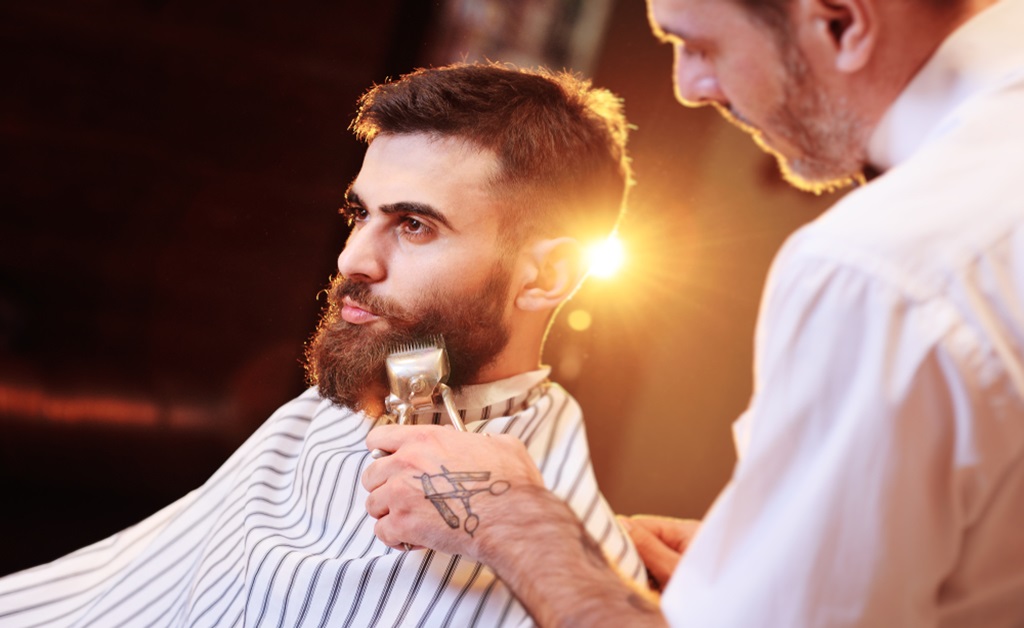
Beards serve as more than threads adorning a man’s visage—they embody masculinity, define style, and display personality. Yet, a recurring query continues to incite discussions within the confines of barbershops and the infinite realm of online forums: does shaving make a beard grow faster?
Influences on the Progression of Your Beard
To evaluate if shaving holds sway over the pace of your beard’s growth, it’s pivotal to discern the variables that mold your facial hair’s growth dynamics. The progression of your beard hinges prominently on three keystones—your lifestyle, genetic makeup, and grooming customs.
Your Lifestyle and Its Impact on Your Beard
Your body’s treatment profoundly influences the vitality of your facial hair. A combination of balanced nutrition, ample rest, and a consistent exercise routine can precipitate the perfect environment for beard growth. A diet teeming with vitamins such as biotin, zinc, and vitamin D bolsters robust, healthy hair follicles. Moreover, containing stress levels can be beneficial, as chronic stress has demonstrated links with hair loss.
The Genetic Blueprint of Your Beard
Predominantly, your genetic code architects your beard’s growth trajectory. Some men inherit the ability to sprout thick, lush beards, while others grapple with uneven or tardy facial hair growth. Aspects like age, ethnicity, and hormone levels, particularly testosterone and dihydrotestosterone (DHT), are instrumental in shaping your beard’s evolution over time.
Grooming Rituals and Their Role in Beard Maintenance
Although grooming doesn’t turbocharge beard growth, fostering wholesome practices can enhance the aesthetic appeal of your facial hair. The employment of top-notch beard oils, balms, and shampoos ensures your beard hair retains moisture, and the skin beneath remains healthy. Regular exfoliation bolsters circulation and sheds dead cells, potentially paving the way for fresh hair growth. Nonetheless, ‘does shaving stimulate beard growth?’ garners mixed opinions.
The Debatable Aspect of Shaving
Shaving has been the pivot of beard growth theories for generations. A prevalent belief exists that brandishing a razor encourages facial hair to regrow more densely, darker, or at a faster pace. However, this assertion lacks corroborative scientific validation. Does shaving make your beard grow faster?
The Science Behind Shaving Demystified
The presumption that shaving triggers facial hair growth probably originates from hair’s visual impression post-shaving. Shaving trims the hair at the skin’s surface, severing the thinner ends of the hair strand. As the new hair sprouts, it may seem more voluminous or coarser as the blunt tip is now visible. Nonetheless, this is a fleeting optical illusion. Shaving doesn’t restructure or hasten the growth of hair beneath the surface. So, does shaving your beard make it grow faster? The answer is no.
Post-Shaving Phenomenon
While shaving doesn’t bolster growth, frequent shaving can shape the way your beard looks over time. Regularly eliminating uneven patches or trimming stray hairs crafts a tidier, uniform look. Although the actual growth pace remains static, this can lend the illusion of a denser, rapidly growing beard. Shaving can also aid in skin exfoliation, preventing the accumulation of dead skin cells that could clog your follicles.
The Real Pathway to Fuller Growth
If enhancing beard growth is your ambition, shaving isn’t the solution. Instead, focus on enriching your beard from the inside out. Uphold a nutritious diet, a stable grooming routine, and consider supplements beneficial for hair health. Patience plays a pivotal role—it requires time for beards to actualize their maximum potential.
If you’re contending with patchy growth or want to probe medical alternatives, seeking a dermatologist’s advice might yield customized solutions like topical treatments or hormone therapies. Utilizing our barbershop services can also help maintain your beard’s appearance while you focus on growth.
The concept that shaving accelerates beard growth is merely a myth steeped in misconceptions. Genetics, lifestyle, and grooming rituals predetermine beard growth – not shaving frequency. Regular trimming can help achieve a neater, fuller appearance, but it doesn’t miraculously expedite beard growth. So, does shaving promote beard growth? Does shaving more increase beard growth? No—it’s all about care, patience, and genetics.
Dru Meskan is the owner and master barber at First & Mane in Scottsdale, Arizona. With 19 years of haircutting experience, including 11 years as a professional barber, Dru is known for precision cuts, modern grooming techniques, and personalized service that keeps clients looking and feeling their best.
Dec 30, 2024 | Barber FAQs, Fade Haircuts
The fade haircut is the MVP of men’s grooming—clean, stylish, and versatile enough to work with just about any face shape or hair type. It’s the go-to for guys who want to look sharp without trying too hard. But after you leave the barber rocking that fresh fade, one question inevitably hits: how long does a fade haircut last? The good news? With a little TLC and the right routine, your fade can stay looking fresh longer than your barber’s last hot take on sports. If you’re ready to keep it sharp, why not schedule an appointment now and keep your look on point?
What is a Fade Haircut?
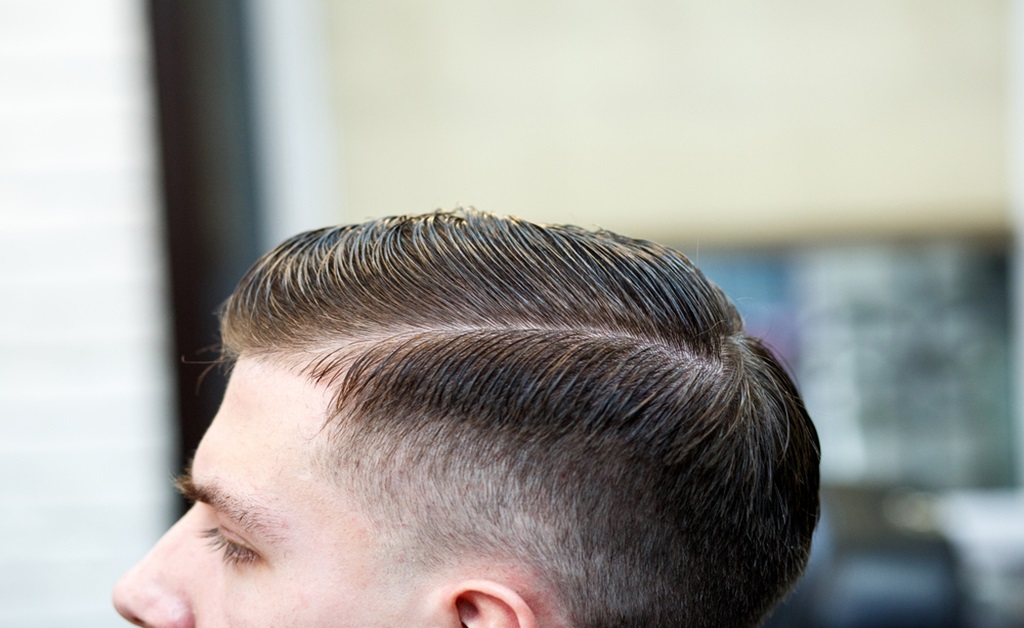
The fade haircut is the ultimate glow-up for your head. It’s all about that smooth, gradual taper from the top down, creating a flawless blend that screams “sharp and sophisticated.” No wonder it’s a fan favorite—this haircut is as versatile as your playlist. Whether you’re going for bold and edgy or low-key and classic, there’s a fade style with your name on it.
From red carpets to locker rooms to boardrooms, the fade is the haircut that never misses. Sleek, sharp, and effortlessly cool, it plays nice with everything—from pompadours and quiffs to buzz cuts and curls. No wonder it’s the MVP of barbershops everywhere.
How Long Does a Fade Haircut Last?
How long does a fade last? Generally, a fade stays sharp for one to three weeks before regrowth starts to blur those clean lines. But, on average, how long do fades last really? It depends on your fade style and how fast your hair grows.
For instance, a low fade, starting just above the ears, offers a subtle transition and grows out more gracefully, making it a great low-maintenance option. A mid fade, beginning at temple height, typically requires touch-ups every two weeks to maintain its balance. Finally, a high fade, known for its bold and edgy look that starts above the temples, shows regrowth the fastest and often needs weekly upkeep to stay pristine.
How long does a skin fade last? This ultra-clean fade style requires the most maintenance, as the close shave will show regrowth quickly, usually needing weekly touch-ups to keep it looking polished. Keep your hair growth rate in mind, as the average person’s hair grows about half an inch per month, which can quickly soften the sharp taper of your fade.
Tips for Prolonging the Life of Your Fade hair day!
Keeping your fade fresh between barbershop trips doesn’t have to be complicated. With consistent effort and the right tools, you can maintain your sharp look while delaying the need for a touch-up.
Keep Trims Regular
Even the best-maintained fade will need frequent trims. Schedule barber visits every one to three weeks, depending on the fade style, to reset its defined shape. If you’re comfortable with clippers, quick cleanups at home can target overgrown areas without fully redoing the style. Need a reset? Schedule an appointment now to get that fresh fade back.
Maintain a Solid Hair Care Routine
Healthy hair translates to a better-looking fade. Use a shampoo and conditioner tailored to your hair type to prevent dryness and frizz, which can mar the fade’s clean edges. Applying a lightweight oil or leave-in conditioner helps maintain hair texture and moisture, minimizing the appearance of uneven regrowth.
Style It to Perfection
Styling products like pomades, waxes, or gels can emphasize your cut. These products define the top of your haircut while smoothing the transition zones. Applying cream only to troublesome or unruly spots ensures the overall look remains polished.
Protect Your Fade Overnight
Yes, how you sleep can affect your fade’s longevity. Cotton pillowcases can pull on hair strands and create frizz, dulling the fade. Switching to a satin or silk pillowcase reduces friction and keeps your fade looking sleek each morning.
Scalp Care is Key
Your scalp’s health can subtly impact the appearance of your fade. Exfoliate your scalp weekly to remove dead skin and product buildup, preventing irritation or flakes that can detract from your sleek look. Keeping your scalp healthy ensures your fade looks its best for as long as possible.
With this guide, you’ll not only be able to answer ‘how long does a fade last?’, but you’ll also have the tools to keep it looking sharp. Whether you’re trying out a low fade, mid fade, or skin fade, the key is maintenance and care. Ready for a refresh? Schedule an appointment now and make every day a good hair day!
Dru Meskan is the owner and master barber at First & Mane in Scottsdale, Arizona. With 19 years of haircutting experience, including 11 years as a professional barber, Dru is known for precision cuts, modern grooming techniques, and personalized service that keeps clients looking and feeling their best.

Dec 18, 2024 | Barber FAQs, Blog
Curly hair, with its vivacious spirals and voluptuous shape, has a captivating allure. However, embracing those curls may present a set of challenges, from maintaining optimal hydration to fighting the frizz beast, and everything in between. A frequently asked conundrum from the gentlemen within the curly hair clan—particularly novices—is: how often should you wash curly hair? This depends on multiple factors, not least of all your individual curl pattern, lifestyle, and personalized hair requirements.
Understanding Washing’s Role in Your Routine
The secret to curly hair health lies in achieving a perfect balance. Washing is crucial in maintaining a clean scalp and bouncy curls by eliminating product residue, dirt, and sebum. But beware of over-washing—it can unintentionally eliminate natural oils, rendering your curls parched, brittle, and susceptible to breakage. Many individuals, blessed with curly tendrils, hold the misconstrued notion that frequent washing equates to cleanliness, while others fear the drought that over-washing can induce.
It all boils down to comprehending your hair and scalp’s unique needs. How often to wash curly hair depends on several factors, including its natural dryness. While every scalp produces sebum, an oil that hydrates the strands, in curly hair, this oil struggles to navigate the meandering path of curls. This is why curly hair can often seem drier and demands a more nuanced washing regimen. By washing correctly, you can sustain a clean scalp and moisturized curls without disturbing their natural equilibrium.
Tailoring Your Washing Schedule
Different curl types require distinct washing frequencies. Typically, the routine depends on whether you have wavy, curly, or coily hair and your tresses’ overall health.
Wavy hair (Type 2) benefits from a gentle shampoo, devoid of sulfates, every 2–4 days. Despite not being as dry as tighter curls, it still needs lightweight and moisturizing formulas. Curly hair (Type 3), on the other hand, calls for a gentle shampoo or co-wash every 4–7 days, maintaining moisture and cleanliness simultaneously. If your curls look lifeless mid-week, a light spritz of water, styling products, or a scalp cleanse can revive them. Lastly, coily or kinky hair (Type 4) is most fragile and needs a wash every 7–10 days. In this case, co-washing should constitute the majority of your routine, with sporadic uses of clarifying shampoos to clear any buildup.
External factors also play a significant role in determining your washing frequency. For those leading an active lifestyle or residing in a humid environment, a frequent rinse may be necessary. Conversely, during the cold, dry winters, washing less often can help retain moisture. The trick lies in being observant and adjusting your routine according to your hair’s needs. How often do you wash curly hair? The answer depends on understanding these external factors and your personal preferences.
Your Personal Hair Care Journey
The path to the perfect washing routine requires time, trial, and error. Ensure your products are hydrating and free of sulfates, carefully curated to cater to the distinct needs of curly hair. Keep a close eye on your scalp health—an itchy scalp or dandruff could hint at the need for more frequent washing. Conversely, a lack of curl definition or dryness might suggest over-washing.
Curl care is all about equilibrium, patience, and understanding your hair’s unique needs. With time and meticulous observation, you will discover a routine that maintains your curls’ vitality and charm day in and day out. Whether you sport wavy, curly, or coily hair, an informed approach to washing can help you maximize your curls’ potential and embrace your natural texture. Still unsure? How often should you wash your curly hair? Dive into tailored advice and deeper insights by exploring our site—read our hair care blogs for expert tips and tricks!
Dru Meskan is the owner and master barber at First & Mane in Scottsdale, Arizona. With 19 years of haircutting experience, including 11 years as a professional barber, Dru is known for precision cuts, modern grooming techniques, and personalized service that keeps clients looking and feeling their best.

