
Last Updated on June 18, 2026 by Dru Meskan
As professionals dealing with clients’ scalps every day, we often come across thinning, changes in hair texture and the presence of pesky white flakes. There are people who ask us in the chair if these pesky white flakes are the ones responsible for causing hair thinning. Indeed, you are not the only one thinking about the link between dandruff and hair loss.
If you are looking for expert advice, you can always contact First & Mane in Old Town, Scottsdale. Such thoughts are completely reasonable because having an itchy scalp is already frustrating enough. But don’t worry! We have prepared everything you need to know about this matter.
What is Dandruff?
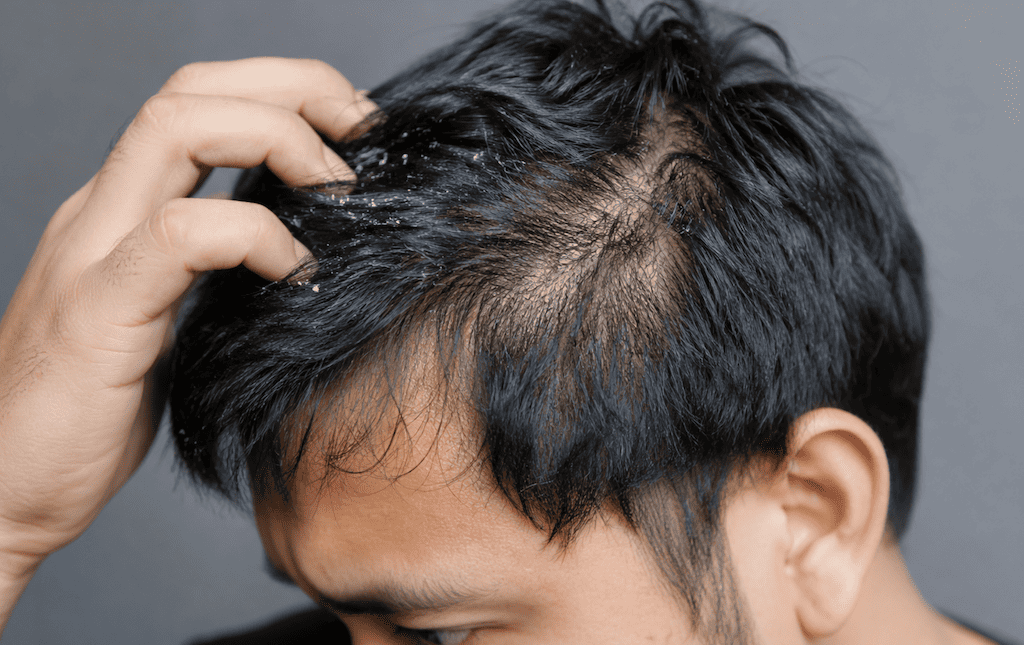
To begin with, it is very important to learn what dandruff is before finding out how it influences hair. Firstly, it must be mentioned that dandruff is a common scalp condition which can happen to anyone regardless of the frequency of hair washing. It occurs due to excessive skin flaking and can either be caused by dry skin or triggered by a yeast-like fungus named Malassezia. This fungus feeds on the natural oils produced by hair follicles and causes excessive shedding of the skin. Therefore, when suffering from this condition, one may see small white flakes on his or her shoulders.
How Does Dandruff Affect Hair?
Healthy hair requires a healthy scalp environment for its normal functioning. It is quite like a garden with soil. In case the soil in it becomes either too dry or too inflamed, the plants growing in it cannot develop properly. Hence, severe dandruff creates unfavorable conditions for hair growth.
Thankfully, the flakes that occur during dandruff do not influence the hair shaft directly and are completely harmless. However, the unhealthy scalp environment makes it difficult for hair follicles to function normally. Many people wonder, can dandruff cause hair loss or impact the overall quality of their hair?
Can Dandruff Cause Hair Loss?
Fortunately, the answer is negative. White flakes do not cause any damage to hair shafts because of their soft structure. So, if hair falls out, dandruff is not the reason behind such a problem. On the other hand, one of the symptoms of dandruff is an intense itching of a person’s scalp.
When it appears, it is hard for a sufferer to resist the feeling and start scratching. This leads to the physical destruction of hair follicles which results in hair breakage and thinning. So, can dandruff lead to hair loss? It’s important to understand the effects of continuous scalp irritation.
Types of Hair Loss Related to Scalp Disorders
There are several kinds of hair loss associated with scalp disorders. Among them, the first thing to mention is friction alopecia. It is simply an outcome of scratching and rubbing your scalp. It leads to hair follicle damage, thus, resulting in hair fall-out. Telogen effluvium is another kind of hair loss which happens due to severe inflammation of a person’s scalp. Such inflammation can put excessive stress on hair follicles which then enter the resting phase and consequently lose hair.
In some cases, dandruff hair thinning can occur as a result of persistent scalp issues. Besides, sometimes people confuse male pattern baldness with dandruff, even though it is a completely genetic issue and unrelated to the problem under discussion.
Conclusion
Now you have learned more about dandruff-related hair problems. While some people think dandruff can cause hair loss, it’s usually scalp irritation and not the flakes themselves that lead to trouble. Remember that a healthy scalp is the guarantee of healthy hair.
In persistent cases, scalp problems could be linked with concerns like dandruff and balding or the feeling that dandruff causes hair to fall. In case you are having some trouble with white flakes, try not to scratch and seek professional help. During your haircut, talk to your stylist who will offer you proper shampoo suggestions and give useful recommendations!

Dru Meskan is the owner and master barber at First & Mane in Scottsdale, Arizona. With 19 years of haircutting experience, including 11 years as a professional barber, Dru is known for precision cuts, modern grooming techniques, and personalized service that keeps clients looking and feeling their best.