Jun 13, 2026 | Blog, Men’s Hair Care
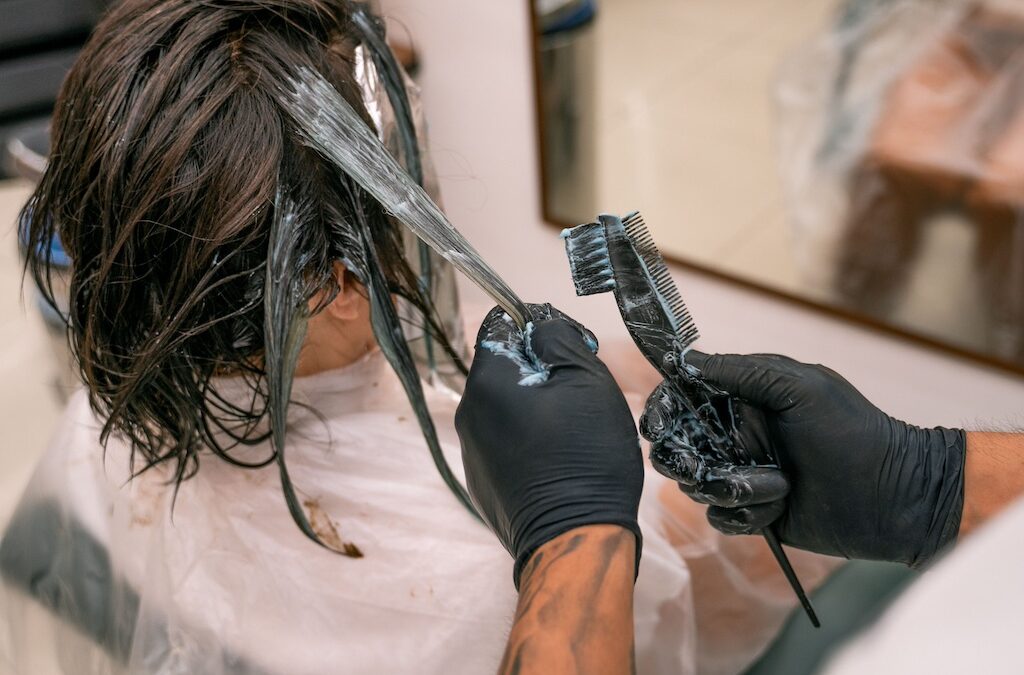
Men’s grooming keeps evolving, and men hair highlights are riding that wave. They used to be shelved as a women-only thing. Not anymore. These days plenty of guys ask for them, looking to add some depth, a bit of contrast, maybe just a little personality up top. And there’s room to play.
Soft, sun-kissed streaks at one end, fully bleached tips at the other, with everything in between. Whatever you pick, it changes the whole look. But the question we hear in the chair more than any other is the practical one: how long is this actually going to last?
The truthful answer is that it depends on a few things. Let’s go through them, and then we’ll get into what you can do to keep your color sharp between visits.
What Determines How Long Your Highlights Last
Your Hair Type and Texture
Coarse, thick hair grabs and holds pigment better than fine or thin hair. So if yours runs on the finer side, the color may start fading sooner. The crown and temples usually go first, since that’s where the sun lands hardest. Curly hair is its own case. Regrowth hides well in curls, which means your highlights can look like they’re lasting longer than they really are. Not a bad trade.
How Fast Your Hair Grows
Hair grows about half an inch a month for most people. Keep it short and that regrowth turns up quickly, often inside four to six weeks. Longer styles give you breathing room. The line between highlighted hair and your natural color blurs as it grows so you can usually push the gap between appointments a little further. If you’re after hair color ideas for short hair, this is worth keeping in mind before you commit.
Your Daily Routine
This is the part people tend to overlook. Heat styling, chlorinated pools, washing every single day, it all chips away at the color faster. Reach for a regular shampoo each morning, and you’re stripping pigment quicker than you need to. It’s one of the most common reasons guys with highlights turn up for a touch-up sooner than they’d planned.
So, How Long Do Men’s Highlights Usually Last?
As a general rule, men’s highlights hold for roughly six to eight weeks before they’re due a touch-up. Technique shifts that, though, which is really what people are asking when they wonder how long do hair highlights last? Traditional foil highlights start right at the root, so regrowth shows up faster and more obviously. Balayage and tips bleaching grow out more gently, because they melt into the natural hair as it gets longer.
To put some numbers on it: very short styles, say a number two or three on the sides, often need attention every four weeks. Medium-length styles sit comfortably in that six-to-eight-week window. Longer styles can stretch to ten or twelve weeks if you’re keeping up with the aftercare. That range is the honest answer to – how long do highlights last for men?
How to Make Your Highlights Last Longer
Switch to Color-Safe Shampoo and Conditioner Right Away
We can’t say this one enough. Standard shampoos are loaded with sulfates, and sulfates pull color straight out of the hair. A color-safe formula holds your highlights noticeably longer. We bring it up on the day of the appointment at First & Mane, because it’s a small change that quietly does a lot of work.
Cut Back on Heat and Sun
UV rays are one of the biggest culprits behind fading, and lighter shades like platinum or ash blonde feel it first. A cap outdoors is practical, sure, but it’s also protecting the color you paid for. Same idea with styling tools. If the dryer’s a daily habit, run a heat protectant through first to spare those color-treated strands.
Wash Less Often
Try to keep washes to no more than three times a week. On the off days, a quick rinse with cool water is plenty. Hot water opens the hair cuticle and lets color escape, which is exactly what you’re trying to avoid. Keep some dry shampoo around too. It gives you that fresh, just-washed feel without stripping anything out.
FAQs
Do Highlights Damage Men’s Hair Permanently?
Highlights are a chemical process, and repeated bleaching can weaken the hair shaft over time. But with sensible aftercare, regular conditioning and a lighter touch on the heat, the damage stays manageable and is often barely there.
Can Men With Very Short Hair Get Highlights?
Definitely. Short hair carries highlights in men’s hair well, and the result reads as sharp and deliberate. Tips bleaching or a salt-and-pepper blend suit shorter styles nicely, and the regrowth grows out more naturally.
How Much Does A Touch-Up Usually Cost?
It depends on the salon, the technique, and where you are. Men generally pay less than women, since the application’s quicker and uses less product. Ask for a quote based on your own hair length and style.
Getting the Most From Your Highlights
Highlights are an investment, in how you look and how you feel walking around. With a steady routine and a realistic sense of the timeline, they’re an easy one to keep up. We’re glad to help with all of it, from choosing the right technique for your hair type to keeping the color looking its best for as long as possible. Book a consultation, and we’ll find a style that works for you!
Dru Meskan is the owner and master barber at First & Mane in Scottsdale, Arizona. With 19 years of haircutting experience, including 11 years as a professional barber, Dru is known for precision cuts, modern grooming techniques, and personalized service that keeps clients looking and feeling their best.

Jun 3, 2026 | Blog, Men’s Hair Care
It happens many mornings. Someone drops into the chair, lets out a breath, and starts in on their hair. Too thick. Won’t sit down. They’ve tried the combs, the pastes, half the bathroom shelf, and nothing sticks.
We see it differently at First & Mane. To us, coarse hair is a gift. All that body, all that texture, all that natural lift? Guys with fine hair drop good money on sea salt sprays and volumizing powder trying to fake exactly what you grow on your own. Book a men’s haircut in Scottsdale, and we’ll show you what that means in the chair.
The fix isn’t fighting your hair. It’s learning what it wants to do and going along with it. Understand how it behaves, and you’ll figure out pretty quickly that you came out ahead in the gene pool. From there it’s just a matter of the right cut. Match the shape to the hair, and your mornings get shorter while you still walk out looking sharp.
What Makes Hair Coarse
It’s all about the width of a single strand. Coarse hair has a wider diameter than fine or medium hair, which makes it strong and durable. That’s the upside. The downside is that the same thickness keeps it from lying flat. It stands up, pokes out, and turns dry or frizzy without much warning, depending on the weather and how you treat it.
Here’s another wrinkle. The natural oils from your scalp have a hard time working their way down a thick, wide shaft, so the hair ends up feeling stiff and stubborn. That’s the exact gripe we hear day in and day out, and it’s why most haircuts for guys with coarse hair start with this one fact.
So hydrate. A solid moisturizing conditioner softens the cuticle and genuinely helps. Still, let’s be straight with each other: no product on earth saves a bad haircut. The real answer to taming what’s on top is asking your barber for the right shape.
Five Cuts We Keep Coming Back To
Sit down in our shop and these are the styles we’ll usually point you toward.
Classic Taper
A workhorse, and one of the most requested haircuts for men with coarse hair. We bring the sides and back down short and blend the length up toward the crown, leaving enough on top to comb over or push back. Coarse hair holds a shape beautifully, so you get a clean, full finish that survives a full workday. Professional without being a chore.
Textured Crop
Want something that looks like you didn’t try? This one’s a shop favorite. We cut the top fairly short and chop into it to pull out the bulk, which lets your hair settle a touch flatter while keeping that messy, broken-up texture. Add a high skin fade on the sides for contrast. Styling takes seconds: a dime of matte clay between your palms, ruffle it through, gone.
Undercut
For the guy who wants real length up top but hates the sides puffing out like a mushroom. We buzz the back and sides short and disconnect them clean from the longer hair above. Coarse hair is made for this. It’s got the backbone to slick back or sweep to the side without flopping against your scalp. It’s one of those hairstyles for men with coarse hair that turns thickness into the whole point: high contrast, a little edgy, all intentional.
Crew Cut
Sometimes shorter is just smarter. The crew keeps a bit of length at the front hairline, tapers down toward the back, and runs the sides tight. Because your hair’s coarse, even that short length stands on its own. You end up with a structured shape and zero product in your routine.
Buzz Cut
When you’re done with the whole circus of washing and styling, this is your reset. Clippers all over, one length, finished. Coarse hair is honestly the best fit, since dense follicles mean no scalp showing through. What’s left is a solid, dark shadow across your head that looks sharp for absolutely no effort.
Come Sit Down
You won’t win the fight against your hair. Work with it instead and the options open right up. Taper or buzz, polished or rugged, that thickness is something to use, not battle.
So swing by when you’re ready. We’ll look at how your hair grows, talk through your morning, and walk you through the men’s coarse hair hairstyles that turn coarse hair into your best feature.
FAQs
How Do I Pick The Right Cut For My Coarse Hair?
Start with how much time you actually want to spend in the morning and how much length you’re after up top. Want something polished you can comb back? The classic taper is a safe bet. Prefer effortless and a little messy? Go textured crop. Crave length without the puffy sides? The undercut earns its keep. And if you’d rather not think about it at all, the crew or buzz keeps things simple. The best move, honestly, is to sit down with your barber and talk it through – we’ll read your growth patterns and your routine, then match a shape to both.
Which Cut Needs The Least Styling?
The buzz cut, hands down, with the crew cut a close second. Both lean on your hair’s natural density to do the work, so you skip the morning product routine entirely. Coarse hair stands up on its own at short lengths, which means a structured shape without any effort. If low-maintenance is the goal, going shorter almost always wins.
Why Is Coarse Hair So Hard To Style?
It comes down to the width of each strand. Coarse hair is thicker than fine or medium hair, so it stands up and resists lying flat. On top of that, your scalp’s natural oils struggle to travel down the wide shaft, which leaves the hair feeling stiff and stubborn. The fix isn’t more product – it’s hydration plus a cut shaped to work with that thickness instead of against it.
Dru Meskan is the owner and master barber at First & Mane in Scottsdale, Arizona. With 19 years of haircutting experience, including 11 years as a professional barber, Dru is known for precision cuts, modern grooming techniques, and personalized service that keeps clients looking and feeling their best.
May 25, 2026 | Blog, Men’s Hair Care
It’s the kind of thing we hear often at First & Mane. A client comes in, scratches their head intensely, and asks…can an itchy scalp mean hair growth or even hair loss? Indeed, this is the popular myth passed from generation to generation, which has caused many to think that the tingling sensation of the skin means that new hairs are being pushed up through the skin.
The idea provides great relief, since growing out a freshly cut hairstyle takes great patience. Any sensation whatsoever gives a welcome sign of progress. The actual biology of having a healthy scalp, however, is far more complicated than any myths may lead you to believe. An itch does not usually indicate new hair; rather, it shows that some special attention is due to the skin on top of your head.
In this guide, we will provide a full breakdown of the biology behind the itchiness and will help you understand what is truly going on with your scalp. Knowing what is the true reason behind the irritation will allow you to take the proper steps to make sure that your hair has the healthiest scalp as a foundation. Let’s ensure that you know enough about the matter to have a healthy, thick mane.
Understanding the Root Causes of a Permanently Itchy Scalp
Impact of Dandruff and Seborrheic Dermatitis
When a client reports an uncontrollable itchiness, we immediately suspect dandruff. The very common condition implies the quick shedding of the dead skin cells on the scalp, often accompanied by a fungus known as Malassezia.
There is even a rarer variant of dandruff, called seborrheic dermatitis, which entails reddened greasy skin with white or yellow flakes covering it. Neither of these things suggests that your hair is growing, even though some people will ask…does an itchy scalp indicate hair growth? They show that your scalp is fighting an inflammation and an imbalance within the microflora of the skin.
Dry Scalp and Its Effect on the Skin
Similar to the skin on your hands, the scalp can become very dry in winter because of a lack of sebum. The lack of the vital substance makes the skin tight and crackled, creating a very strong irritation effect. The most frequent victims are clients who tend to wash their hair with excessively hot water and aggressive shampoos, which deprive their scalp of moisture. Adding sufficient amounts of moisture is the only solution to such a problem, even though some may assume itching scalp means hair is growing.
Dangers of Product Buildup in the Scalp Tissue
We love grooming as much as anyone else in this business, but the overuse of any styling product without proper cleaning creates the product buildup effect. In the course of time, the accumulation of various substances (natural oils, sweat, pollution) becomes very thick and starts to create a layer above the scalp. This layer suffocates the hair follicles and irritates them, thus causing a permanent itch. It has to be cleaned thoroughly to restore normal activity of the skin, regardless of myths like itchy head hair growth.
Indicators That You Should Visit the Dermatologist
Although a little bit of an itchiness is quite usual, you have to pay particular attention if the sensation interferes with your daily activities or prevents you from sleeping at night. Other signs suggesting that something serious is going on are extreme redness, swelling, and sores on your scalp. They may indicate either the development of the scalp psoriasis or the reaction of the tissue to a certain hair product, rather than ‘itchy scalp means hair growth’. If regular washing does not help to eliminate the problem in several weeks, it’s best to pay a visit to the doctor.
FAQs
Does Scratching My Scalp Cause Hair Loss?
Scratching the scalp is a very dangerous action, as you can easily damage the hair follicles and break your hair strands. Moreover, breaking the skin allows the bacteria to penetrate it and cause infection. Instead, you may simply massage your scalp gently using the pads of your fingers to remove the tension without doing any damage.
How Often Should I Wash My Hair To Avoid The Problems?
The frequency of hair washing varies depending on your hair type and activity levels. For people with high activity or oily hair, we suggest washing every two days to prevent sebum buildup. People with coarse, thick, or naturally dry hair will probably only need to wash their hair once or twice per week to maintain moisture.
Are There Any Effective Ways To Soothe The Irritation?
Fortunately, there are numerous options that help calm your scalp. We highly recommend using special shampoos with tea tree oil, peppermint, or salicylic acid, which will gently cleanse and relieve the irritation. Whether a men’s messy hair look or a professional one, weekly scalp scrubs will also be able to clean up excess product and dead skin without causing any extra discomfort.
Achieving Healthiest Hair at First & Mane
Having a completely healthy scalp is the key to growing strong and thick hair. Although the itchiness will never mean hair growth, it reminds you of your responsibility for caring about it. In case you have troubles managing your scalp irritation or wish to improve your routine, visit our team and consult a specialist!
Dru Meskan is the owner and master barber at First & Mane in Scottsdale, Arizona. With 19 years of haircutting experience, including 11 years as a professional barber, Dru is known for precision cuts, modern grooming techniques, and personalized service that keeps clients looking and feeling their best.
May 15, 2026 | Blog, Men’s Hair Care
Most of the men who sit in our barber chairs face the same question while looking in the mirror. They are concerned about changes in their hairlines or crowns and want to know how to make hair thicker. The truth is that hair thinning is a pretty normal phenomenon among aging men, associated with genetics, stress, and other factors of a person’s lifestyle.
As professionals at First & Mane, we know your problems very well and realize that you have several ways to turn this condition around and have thick hair again. There are some tips that, if utilized correctly, will help you increase your hair volume!
How Diet Supports Thicker Hair Growth
It might be surprising, but thick hair begins developing inside your body long before they appear on your head. Our advice is to remember that hair follicles require particular vitamins and minerals for thick hair, so you should never forget about proper nutrition.
Firstly, note that hair consist of keratin proteins, meaning that you must ensure that your body has sufficient amounts of proteins. Eat fish, chicken, eggs, lean meats, or whatever else to provide your body with nutrients that hair shafts need.
Secondly, try eating more fatty food, such as salmon or avocado, since they contain omega-3 fatty acids that will contribute to keeping your scalp healthy and nourished and help grow thicker hair. Finally, remember to drink a lot of water, since it helps to hydrate your scalp from the inside and avoid having dry, fragile hair.
Supplements that Can Increase Hair Thickness
Unfortunately, despite efforts of many people, proper nutrition might fail to give hair follicles everything they need. Fortunately, there are several supplements available to provide them with missing nutrients, which include biotin (needed for keratin), as well as vitamins D and C (which influence hair growth). Our advice would be to consult a doctor regarding starting this kind of treatment program. Whatever you choose, we think that multivitamin hair growth supplements work really well.
Creating a Good Scalp Care Routine
Usually, men tend to ignore their scalps, considering them to be simple hair-bearing surfaces. However, there are several ways of improving scalp conditions, starting with regular scalp massages. You just need to spend five minutes each evening massaging your scalp, which increases blood flow in this part of your body. Thus, you will give hair follicles extra nutrients and oxygen and increase the likelihood of hair growth, which many consider the best way to thicken hair.
Another tip is to include oil treatment in your scalp massage program. Certain oils are known to improve the condition of your scalp and make hair look thicker.
Products to Help Thicken Your Hair
Unfortunately, cheap shampoos often negatively affect hair due to harmful chemicals included in them. They usually remove natural oils from your head and dry out your scalp. You can solve the problem by changing hair care products and using thickening shampoos containing ingredients, such as saw palmetto and caffeine. These products prevent hair loss caused by hormonal imbalance. You should also try using exfoliation once a week to remove dead skin and clogs from hair follicles.
Using Blow Dry Techniques Correctly
You might know that most men simply style their hair after a shower. However, if you want them to look thicker, you need to learn how to use a hair dryer properly. Start with using a pre-styling spray to moisturize your hair and then use the blow-dryer by directing air towards hair roots and lifting them up, which is one of the best ways to get thicker hair.
Avoiding Heavy Pomades and Gels to Make Your Hair Thicker
In reality, a major reason why hair tends to become thinner is that certain products lump them together and expose your scalp. Thus, avoid using gel, which has a similar effect as hair wax. Use only matte hair products, which can include texturizing clay, styling paste, and powder. The advantage of this product is that they do not reflect light, so hair strands tend to spread apart when rubbed between your palms, making them appear thicker.
FAQs
Is It Possible For Thin Hair To Become Thicker?
The answer is that you should definitely try. The thing is that hair becomes thin when hair follicles go dormant because of some health issues. All you need to do to reverse this process is to eliminate the causes of hair loss and stimulate hair follicles to produce thicker hair. Otherwise, you will have to find hair restoration methods, both home and medical ones.
How Often Should Hair Be Washed?
Hair washing should be carried out two to three times per week. Too frequent washing can strip your hair from its natural oils, which leads to hair breakage. If you skip shampoo one day, simply wet your hair and use one or two drops of conditioner.
Can Wearing Hats Cause Hair Loss?
Another popular myth says that hat-wearing can cause hair loss and contribute to male pattern baldness. However, there is nothing bad about hats, except in rare occasions when they are extremely tight. Such hats can damage hair follicles by applying constant traction to them. This is also worth keeping in mind when choosing hairstyles for a round-faced man or another shape.
Achieving Desired Effects with Our Help
Although thick hair requires some time and effort, it is possible to obtain desired results by following our recommendations in terms of hair nutrition, scalp care, and styling. By the end of one month, you will be able to notice improvements in your hair, so when you are ready for your haircut, come and see us at First & Mane!
Dru Meskan is the owner and master barber at First & Mane in Scottsdale, Arizona. With 19 years of haircutting experience, including 11 years as a professional barber, Dru is known for precision cuts, modern grooming techniques, and personalized service that keeps clients looking and feeling their best.

May 5, 2026 | Blog, Men’s Hair Care
Regularly, we hear one particular question from our customers while they sit in our barbershop chairs at First & Mane. These men usually bring along an image of a rockstar, surfer, or any other celebrity who has long flowing hair and ask us…how long for hair to grow?
The beauty of having longer locks surely does appeal to guys as it makes them look confident and stylishly laid-back. However, there are some popular myths about hair growth speeds that are far from the truth. For instance, most men think they could easily grow long hair within a few weeks.
In actuality, growing half an inch of hair each month is an average speed, which means that guys would have to wait for about six inches each year. Nevertheless, there are some factors affecting hair growth, which we consider each time our customers ask this very question!
Core Factors of Male Hair Growth
Becoming a guy with long locks is not only about regular visits to barbershops and hairdressers. There are also some biological and environmental factors that influence hair growth greatly.
Impact of Genetics
Our DNA is responsible for such aspects as hair growth and hair speed. In other words, genes define hair length, since the duration of the anagen phase varies for different individuals. This phase is considered the growing one and lasts from two years to several more depending on the person’s DNA.
Moreover, our DNA defines the maximum length of hair we may have, as well as its speed of growth. We cannot change our genes, but you can definitely learn tips to grow long hair as a male and how to cope with our natural hair type.
Proper Diet for Strong Hair
Hair mainly consists of a protein known as keratin, which means that our diet influences the condition of our hair to a great extent. Eating healthy food and drinking lots of liquids are the key things to remember when growing longer hair. Firstly, it is important to consume enough amounts of protein, iron, zinc, and vitamins A, C, and E. Second, drinking plenty of water helps to detoxify the body, keeping hair shafts flexible and moisturized.
Influence of Daily Hair Care Habits
Daily treatment of hair is extremely important for guys who want their locks to get long as soon as possible. To grow long hair for men, wearing the hair wet can lead to numerous problems as it breaks easily in a humid environment. Washing hair twice or three times a week with good quality sulfate-free shampoo and proper conditioning are also crucial. We recommend towel-drying it and using a wide toothed comb instead of violent brushing.
Heat and Chemicals Can Harm Hair Growth
Using a blow-dryer constantly leads to hair damage because of extreme temperatures. Bleaching and dying also result in hair being damaged; therefore, it can simply break at the ends. Since the ends do not grow anymore, it seems like we have stopped growing our hair, even though roots keep developing.
Optimal Scalp Health for Long Hair
Hair growth begins with the health of the scalp, which is similar to the healthiness of soil for plants. Therefore, the ideal environment for growing hair should be dandruff-, sebum-, and inflammation-free scalp. Moreover, it is also necessary to provide blood circulation in this area, as massage can encourage hair growth.
Timeframes Depending on Hair Type
So, how long does it take to get long hair? If a guy wants to achieve a medium-length haircut, he would need between six and twelve months to do that. If he wants to reach a stage where hair can be tied in a ponytail, it will take him around eighteen to twenty-four months. Moreover, curly hair types grow slowly due to the helix structure making it shrink instead of becoming longer. Straight hair tends to grow faster and appear longer sooner.
FAQs
Shall I Still Go For Haircuts When Growing Long Hair?
Yes, of course! Cutting hair ends once in a while is necessary, as it prevents hair from splitting and breaking. Even though haircuts do not accelerate its growth, they stop it from breaking further up the shaft and make it shorter.
Will Using Special Shampoos Help Me Grow Hair Faster?
Unfortunately, no product can accelerate hair growth, but it is still important to use shampoo that will provide healthy scalp conditions and strengthen hair, which will help to maintain its length.
What Is The Awkward Stage? How Do I Deal With It?
This stage occurs in a few months after the beginning of hair growing process when locks become too long to wear normally, but still too short to tie in a bun. First & Mane can provide tips on how to deal with this issue successfully.
Patience Is Required to Grow Long Hair
It is clear now that growing long hair requires lots of patience, care, and consistency. One should stick to a correct diet and hair care routine and have realistic expectations regarding hair growth speed. It may take some time to grow longer locks, but the end results are totally worth it. As for men’s haircuts in Scottsdale, we can give advice on how to grow longer hair properly. If a man is eager to start the process, he should make an appointment, and we will create a detailed action plan together.
Dru Meskan is the owner and master barber at First & Mane in Scottsdale, Arizona. With 19 years of haircutting experience, including 11 years as a professional barber, Dru is known for precision cuts, modern grooming techniques, and personalized service that keeps clients looking and feeling their best.
Apr 27, 2026 | Blog, Men’s Hair Care
Men often sit down in our barber chairs fresh from their shower in the morning, with slightly damp hair and the scent of shampoo still emanating from it. After looking into the mirror, they conclude that they’ve finally found the time to conceal those gray hair threads or experiment with a whole new hair color.
Upon inquiry about the last hair wash, these clients proudly report that they recently washed it thoroughly. The sad part is that we then have to explain to them that squeaky clean hair is definitely not the best choice, much like the timing questions that come up around washing your hair after a haircut.
Determining an Optimal Time of Washing Hair Before Coloring
Trying to balance the desire of making oneself presentable before a barber and the one of receiving the best coloring results may prove tricky. In the course of our weekly activity in the barbershop at First & Mane, we’ve come across this issue many times, especially when clients ask, can you dye freshly washed hair? That is why we want to clarify the question once and for all to guarantee your comfort, long-lasting hair color, and overall quality of the procedure.
The Basics of How Hair Dyeing Works
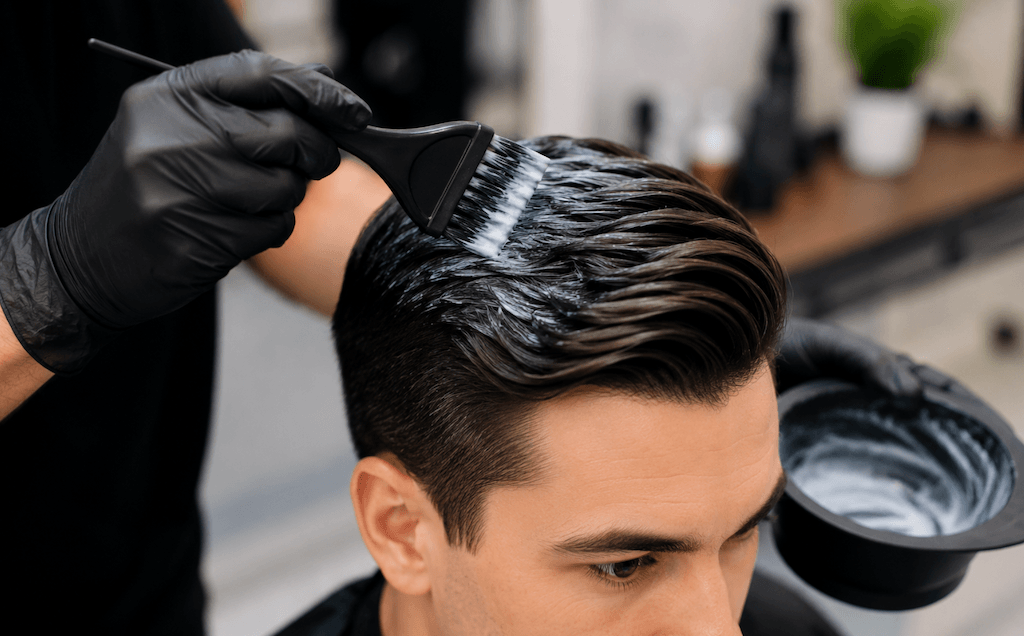
In order to find out how freshly washed hair affects the coloring process, it is vital to understand the mechanism itself. Hair coloring relies on chemical reactions, as the color molecules need to be inserted into the inner layers of the hair cuticle to create an even coating. For such insertion to occur, ammonia or another alkali is required as an open-upping medium for the cuticle cells.
The scalp glands constantly produce an oil, which is called sebum, and this sebum travels down to the hair strands. Being the natural protection for your head, this product defends it from the environmental factors, as well as friction and aggressive chemical products. When your hair cuticles have a natural covering of sebum, this oil regulates the chemical reactions during the coloring process.
Why Is Recently Washed Hair Bad for You?
Can I wash my hair before I dye it? A heavy wash of your hair eliminates all of its protective properties by removing the natural oils. As a result, your scalp remains completely unprotected, which creates an unpleasant risk of burning, itching, and other kinds of irritations. We would prefer having you relaxed and enjoying your hair care procedure rather than in pain caused by the chemical compounds.
Another disadvantage of washing hair just before coloring it concerns how the color molecules will adhere to your hair. While the coloring will occur regardless of hair being freshly washed, some people face problems with the penetration of chemicals into the hair structure. This is due to the additional layer created by the conditioner left over the hair strands.
The Ideal Scenario for Dyeing Hair
The optimal way of getting your hair colored would be coming to the barber shop after 24 to 48 hours of washing your hair. With this timeline, you will allow yourself enough time to develop a protective layer while remaining free of excess natural oils. If you decide to experiment with color, it is recommended to use a clarifying shampoo the day before coloring.
Make sure that your hair is completely free of any heavy styling products. This will enable us to apply the chemicals properly, thus creating even color across the strands. If you work out a lot or have a physically intense job, a rinse may be done 24 hours prior to coloring, but do n`ot use heavy shampoos. Should I wash my hair before dying it? If you have the option, avoid washing directly before an appointment. We can always assess the state of your hair ourselves and provide tailored advice.
FAQs
How Long Should You Wait To Dye After A Wash?
You should never rush coloring and should wait at least 24 hours after the last hair wash. An option of waiting up to 48 hours proves ideal for men with sensitive skin because it will provide extra protection for the scalp.
Can I Use A Conditioner The Day Before Dyeing My Hair?
You should stay away from conditioners because of their nature. As opposed to shampoos, they aim at smoothing the cuticles and forming a protective film. This film will prevent the coloring molecules from penetrating into the inner parts of the hair strands and, consequently, create an unsteady color.
Will Wet Or Dry Hair React The Same Way To Hair Dye?
When you apply the hair dye on wet hair, the coloring will turn out to be ineffective because the water fills up the pores inside the cuticle. This way, the coloring molecules will fail to insert into the strands. Consequently, we always apply hair colors on entirely dry hair to make sure the effect is vivid enough.
Achieve the Best Color Result at First & Mane!
Can I dye my hair after washing it? Now you know. It is crucial to keep your scalp protected from any harm while enjoying an awesome hair color. Do not hesitate to visit our barbershop for a consultation concerning your hair issues!
Dru Meskan is the owner and master barber at First & Mane in Scottsdale, Arizona. With 19 years of haircutting experience, including 11 years as a professional barber, Dru is known for precision cuts, modern grooming techniques, and personalized service that keeps clients looking and feeling their best.

