
Feb 23, 2026 | Beard Maintenance, Blog
It’s one thing to grow a beard, and it is another thing entirely to take care of the skin underneath the beard. This is where most men tend to go wrong. We’ve seen it happen so many times in our barber shop. Men come in, complaining of itchiness, flakiness, and irritation beneath their beards. Well, let us tell you something: dry skin beneath a beard is one of the most common problems out there, but it is also one of the most preventable problems out there. With the right solution, of course.
If you need expert advice on beard care, contact our barbers at First & Mane for personalized tips and recommendations!
What is Beardruff, and What Causes Dry Skin?
If you notice white flakes in your beard, then you have what we call “beardruff.” Simply put, beardruff is where the skin beneath your beard dries up and flakes off, and these flakes get caught in your beard.
Sadly, there are a lot of different reasons for beardruff. One of them is because you are using harsh soaps on your face, which dry up your skin and cause it to flake off and get caught in your beard. Another reason for beardruff is because you are not washing your beard enough. It could also be because you are not moisturizing the skin beneath your beard enough. Experiencing dry skin under a beard is more common than you think, but it is preventable with the right routine.
Deep Cleansing with Beard-Specific Products
So, if you want to get rid of the dry skin that is located underneath your beard, then you need to start off with the right cleansers. What this means is that you need a beard wash, as opposed to a traditional wash. This is because a beard wash is a specialized combination of ingredients that is designed specifically to wash beards, while keeping the skin underneath moisturized. If you’ve noticed that the skin under the beard is dry, this switch can really help. You need to wash your beard two or three times a week. Any more than this, and you start stripping the oils.
Exfoliation is one of those steps that people tend to overlook. Dead skin cells can build up under your beard in no time, leading not only to dry skin but also to beardruff. Our advice is to brush your beard once or twice a week with a soft-bristled brush or scrub. Massage it onto your skin, getting it as low as possible. This not only helps remove dead skin cells, it also improves circulation, allowing moisturizers to penetrate deeper.
Of course, do not overdo it, or you may irritate your skin easily. If you’re wondering how to treat dry skin under beard, regular exfoliation is a crucial part of the solution.
Choosing Between Beard Oils and Balms
After you have cleaned your beard, you now need to seal in all that moisture you have applied. Our first advice is to try out a beard oil. Believe it or not, it works wonders. Simply apply a few drops of oil onto your damp beard hair, then massage it onto your skin. If you have dry skin, then you may want to consider a utility balm. These help seal in all that moisture, allowing it to penetrate deeper. Simply apply it onto your skin after you have applied oil.
It’s All About Routine
Though not rocket science, getting rid of dry skin under your beard requires a little effort. The solution is quite simple: wash your beard regularly with good quality wash, brush your beard once or twice a week, and moisturize your skin with good quality moisturizer. We have already helped hundreds of clients get rid of their beardruff and dry skin irritation by following these simple steps. If you’ve ever thought, “Why do I keep getting dry skin under my beard?” – just know that with a consistent routine, results will follow. That is as simple as it gets! washing your hair two or three times a week. On the other days, try and rinse your hair with water.
Condition Your Hair After Washing
This is yet another area where men are getting it wrong. This is a crucial step in ensuring your scalp is moisturized and hydrated.
Conditioner is supposed to be used only in your hair ends and lengths, never your scalp. This is because it will lead to buildup.
Finding the Right Product
At the end of the day, every person’s scalp is different. What works for your friend may not work for you. You will have to try a few of the products mentioned here and find the right one for your use.
If your problem still persists even after you have done your best with the special products and the right methods of washing your scalp, it is time to book an appointment with your doctor.
There is no need to complicate the process. With the right ingredients and the right methods of washing your scalp, you will have a better experience and a better head of hair too. If you need personalized advice, don’t be afraid to ask the next time you’re in First & Mane!
Dru Meskan is the owner and master barber at First & Mane in Scottsdale, Arizona. With 19 years of haircutting experience, including 11 years as a professional barber, Dru is known for precision cuts, modern grooming techniques, and personalized service that keeps clients looking and feeling their best.
Feb 16, 2026 | Men’s Grooming Tips, Men’s Hair Care
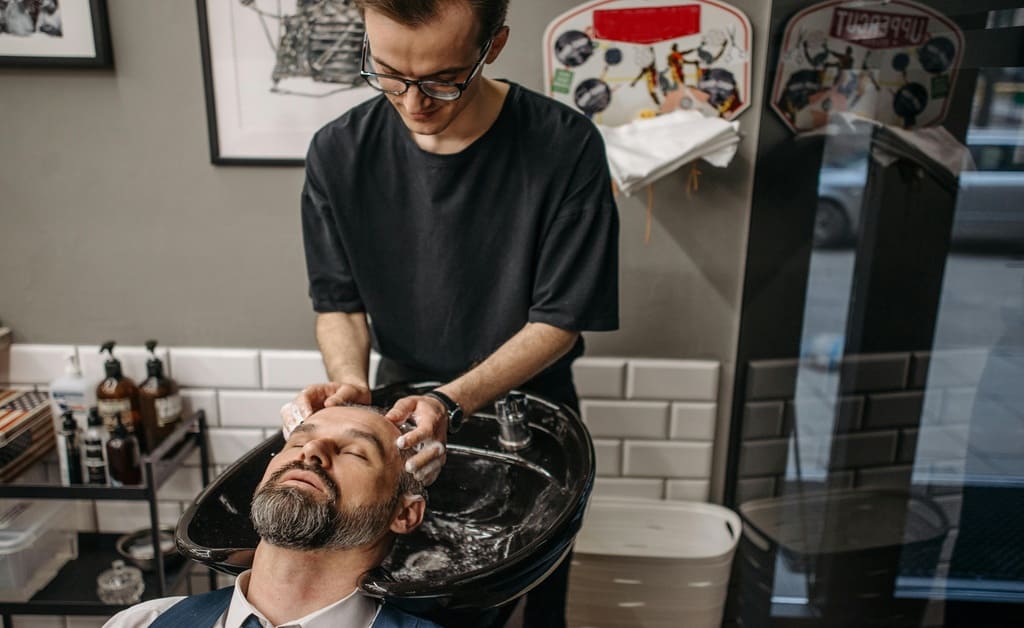
A dry and flaky scalp is uncomfortable. And it also affects one’s self-confidence as well as self-esteem. So not the best way to start a Monday!
At First & Mane, we’ve seen many men who have itchy, irritated, and flaky scalps. The weird thing is that their regular shampoo is actually making their condition worse. For men who prefer styles like the French crop haircut, maintaining scalp health is especially important.
The good news is that the best shampoo options can help, and it’s easy to make more informed decisions. To assist you in finding the best shampoo, we will now discuss the key factors you need to consider!
Why a Dry Scalp Shampoo is the Best Choice for You
Unlike other shampoos that are meant to clean your hair but end up removing the essential oils that your scalp requires to stay healthy, the best men’s shampoo for a dry scalp is meant to moisturize your scalp while cleaning your hair. This is the reason why we have seen many men in our barber shop who are unaware of the fact that their regular shampoos can actually make their scalp worse.
Key Ingredients Found in the Best Shampoo for Your Dry Scalps
It’s always important to consider the ingredients used in the best shampoo (you just can’t ignore this anymore – sorry!). For many, choosing a men’s shampoo for a dry scalp can make a noticeable difference in comfort and scalp health. It’s important to note that not all moisturizing shampoos are the same.
Tea Tree Oil
This is an antiseptic that reduces inflammation and helps in killing fungi or bacteria that cause dryness in your scalp. In addition to that, it also has a cooling effect that will bring you instant relief from an itchy scalp. When you are purchasing a dry scalp shampoo for men with tea tree oil, you have to ensure that it is included in the shampoo’s ingredients early on to ensure that it is included in sufficient quantities.
Ketoconazole
If you have more serious cases of dryness and flakiness in your scalp, then you might want to use a shampoo for dry scalp for men with ketoconazole as an antifungal that targets the source of dandruff and seborrheic dermatitis. We recommend this shampoo to you if you have failed to find relief from other shampoos. However, it is essential to use it correctly to avoid abuse.
Moisturizing Agents
Glycerin, aloe vera, and natural oils like argan and jojoba assist in moisturizing your scalp. These are essential to the health of your scalp, and choosing a men’s dry scalp shampoo with these ingredients can make a noticeable difference.
Washing Techniques to Prevent Further Dryness
Sadly, it doesn’t matter how good the shampoo you’re using is if you’re not using it correctly. We have seen many men make mistakes in washing their hair that cause them to have an itchy and dry scalp. We’re here to guide you through the washing technique so that you will be able to have an itch-free scalp in no time.
Use Lukewarm Water
While hot water feels great and is soothing to an itchy scalp, it is also drying. Ensure that you are only using lukewarm water to wash your hair. When you are done washing your hair, use cool water to rinse in order to shut your cuticle and ease your itchy scalp.
Shampoo Your Scalp and Not Your Hair
Next time, you should try and massage the shampoo into your scalp, using your fingertips rather than your nails. This will ensure the blood is flowing, and the shampoo is getting to the parts of your scalp where it is needed the most. Leave the shampoo in your hair for a minute or two before rinsing it out.
Don’t Over-Wash Your Hair
Over-washing your hair is only going to dry your scalp even more. We recommend washing your hair two or three times a week. On the other days, try and rinse your hair with water.
Condition Your Hair After Washing
This is yet another area where men are getting it wrong. This is a crucial step in ensuring your scalp is moisturized and hydrated.
Conditioner is supposed to be used only in your hair ends and lengths, never your scalp. This is because it will lead to buildup.
Finding the Right Product
At the end of the day, every person’s scalp is different. What works for your friend may not work for you. You will have to try a few of the products mentioned here and find the right one for your use.
If your problem still persists even after you have done your best with the special products and the right methods of washing your scalp, it is time to book an appointment with your doctor.
There is no need to complicate the process. With the right ingredients and the right methods of washing your scalp, you will have a better experience and a better head of hair too. If you need personalized advice, don’t be afraid to ask the next time you’re in First & Mane!
Dru Meskan is the owner and master barber at First & Mane in Scottsdale, Arizona. With 19 years of haircutting experience, including 11 years as a professional barber, Dru is known for precision cuts, modern grooming techniques, and personalized service that keeps clients looking and feeling their best.

Feb 9, 2026 | Men’s Grooming Tips
Your hairstyle is a big part of who you are even before you say anything. When you walk into your office looking sharp and well-kempt, you are setting the tone for how you want people to perceive you. When you get a hairstyle, not only are you going to look even more professional, you are also going to get an added boost of confidence as you go about your day at the office.
At First & Mane, we can help you, as a working professional, find the perfect hairstyle that not only looks good on you, but is also suitable for the office. For more tips and inspiration, read our expert barbers’ blogs.
Top Men’s Hairstyles for Business Casual Look
Here are four hairstyles that we think will do well at your office, which we suspect is a business casual kind of environment:
Side Part: Clean and Structured
One of the best hairstyles that we offer at our barbershop is the side part. This is one of the most reliable hairstyles that you can get at an office, given that it is one of the most powerful hairstyles out there. Not only is it powerful, it also says a lot about you as a person, given that it shows you take your looks seriously.
With this hairstyle, we comb your hair so that there is a clear part, then style it so that it falls to one side with a light pomade or cream. This is one of the most sleek and sophisticated business casual hairstyles out there, and you are bound to make an impression at office meetings with this hairstyle. This hairstyle is most suitable for men with straight hair or wavy hair.
Classic Taper: Timeless Versatility
One of the best things about getting a haircut as a working professional is getting a classic taper. It is one of the most versatile hairstyles for business casual we offer at our barber shop. Our barbers cut your hair from top to bottom, resulting in a smooth and sleek hairstyle that is sure to make a great impression at your office.
The best thing about getting a classic taper is that you can style your hair at the top however you want, depending on your office culture. Also, you can easily grow your hair out if you want a change in the near future.
Textured Quiff: Personality Meets Polish
For professionals, textured quiff is an excellent hairstyle that meets personality and polish requirements. In styling this haircut, we add texture by layering your hair and then styling the front portion of your hair upwards and slightly back. The textured quiff is an excellent business casual men’s hairstyle that meets personality and polish requirements while being professional and casual at the same time. A matte product is used to add an effortlessly polished finish to this hairstyle.
Modern Pompadour: Contemporary Confidence
For professionals, the pompadour is a great hairstyle, especially because it satisfies the requirements of a business casual dress code. The pompadour is not too high, as were its predecessors, and has sides that make it professional enough. When we style this haircut, we sweep it up and back and add a little product to style it without making it too stiff or too casual. This look has become increasingly popular among those seeking men’s business casual hairstyles that balance confidence with professionalism.
Choose Your Professional Edge
A hairstyle is not an accessory but an extension of one’s personality and professional style. You may want to have the elegance of the classic side part, the modernity of the textured quiff, or the sophistication of the modern pompadour, but the professional edge you seek is dependent on your professional style.
If you are ever in First & Mane, we would like to invite you to come and discuss with us the options that would give you the best professional cut. We would be glad to recommend the perfect cut for you, depending on the nature of your hair, face, and type of work you do. Come today and walk into that office with confidence!
Dru Meskan is the owner and master barber at First & Mane in Scottsdale, Arizona. With 19 years of haircutting experience, including 11 years as a professional barber, Dru is known for precision cuts, modern grooming techniques, and personalized service that keeps clients looking and feeling their best.
Feb 2, 2026 | Beard Grooming, Beard Maintenance
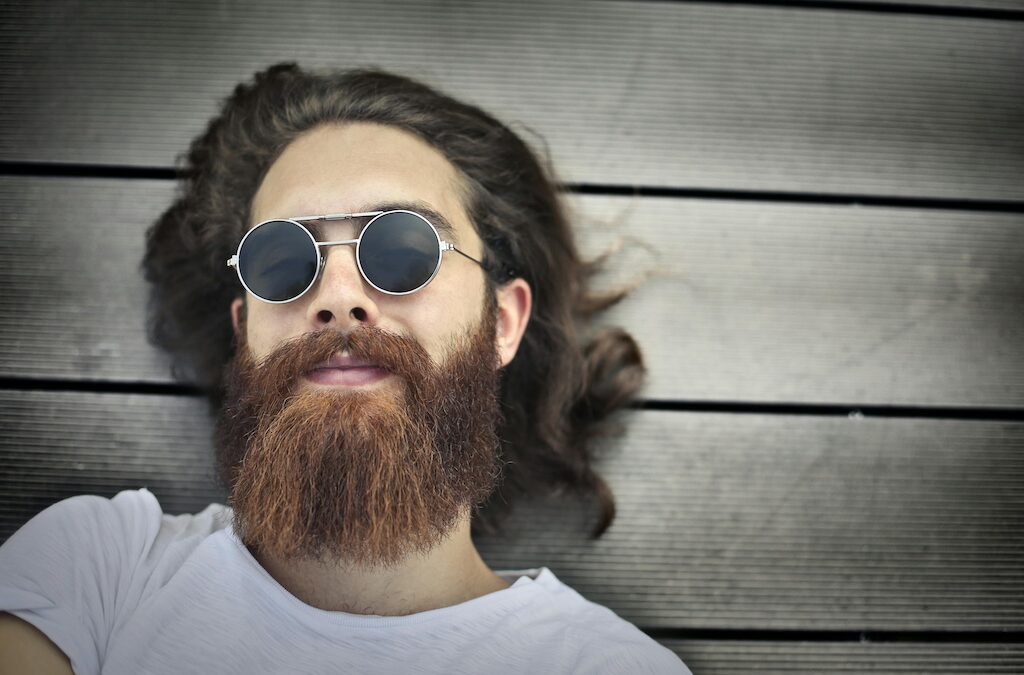
One of the most asked questions from our chairs at our local barber shop near the Scottsdale area is about patience. A client will come in, scratch the week-long stubble on his face, and ask, “How long before I can get a full beard?” The answer, while not necessarily one the client wants to hear, is quite simple: it’s a marathon, not a sprint.
Hair grows, and it grows in ways that are unique to the individual. While we can certainly style, cut, and shape the facial hair to look the best it can, it really does come down to the individual’s hair follicles. While it may not be the most fun, the science behind the growth of the person’s facial hair can certainly help you understand the process and get through the difficult parts.
The Timeline: From Stubble to Full Beard
For the average person, the rate of beard growth is about half an inch every month. This means that if you’ve ever wondered…how long will it take to grow a full beard? It will usually take between two and four months of growth.
The first two weeks will result in the formation of heavy stubble. This is the most difficult period in the formation of the beard because the hairs will be short and will have the tendency of curling back onto the skin, thus causing itchiness. By the end of four weeks, the beard will have grown by half an inch. During this period, the itchiness will have stopped, but the beard may not look good.
The magic will begin in the second and third months of the process. During this period, the length of the beard will have grown enough to fill in the gaps, and the hairs will have grown heavy enough to lie flat on the skin. By the end of the fourth month, the average man will have grown enough beard for it to look thick and substantial.
Factors That Influence Speed
Although half an inch of growth is average over a month in most men, this may vary in individual cases. Genetics is responsible for determining your length and growth speeds. If men in your family struggle with growing a full beard, it may take you slightly longer to get to that point.
Age is another key aspect that should not be ignored when growing a beard. Ideally, beard growth is most pronounced when one is between 25 and 35 years of age. It is also the period when one has the highest level of testosterone in their system, and this hormone is key to beard growth. In addition to this, one’s state of health should also not be ignored. Eating healthy food that contains proteins, vitamins, and biotin will help in beard growth.
Practical Tips to Help It Along
You may not have the power to change your DNA, but you can certainly create the right environment that allows you to grow a full beard to its best. You should ensure that the area underneath your beard is clean and well moisturized. Our advice to you is to use beard oil on your beard from the very beginning. Not only will this oil ensure that your beard does not itch during the initial stages of growth, but it will also ensure that your beard is soft and silky.
Avoid cutting your beard too soon. Many men have cut their beard growth short by attempting to shape their beard too soon. You should not make this mistake. Just let your beard grow wild for at least four to six weeks before you allow us to work on it with a pair of clippers.
Patience is the Best Grooming Tool
Growing a beard is one of the true tests of patience that anyone may have to undergo in their entire life. There are some stages in beard growth when one may feel that their beard looks quite awkward and wild. However, it is during these stages that one should show their patience if they are truly interested in getting the kind of results they desire. Once you have reached the three to four months mark in your beard growth, you should visit us at First & Mane and let us shape your beard perfectly!
Dru Meskan is the owner and master barber at First & Mane in Scottsdale, Arizona. With 19 years of haircutting experience, including 11 years as a professional barber, Dru is known for precision cuts, modern grooming techniques, and personalized service that keeps clients looking and feeling their best.

Jan 31, 2026 | Men’s Haircuts, Style Guides
Trends come and go in the grooming industry for men. One year, it is all about man buns, while the next year is all about buzz cuts. However, in the midst of all the trends that come and go, there is one hairstyle that stands as a steadfast constant. The side part is the holy grail of hairstyles for men. It is a hairstyle that is always in style, always a cut above the rest, and can work on most of the guys that come to our barbershop.
Contact First & Mane if you want more personalized advice or to book your next appointment for the best grooming experience. In the meantime, let’s delve into the side part style!
A History of Sophistication
In order to grasp the power of this particular cut, we must examine its legacy. The side part was the epitome of the Golden Age of Hollywood, topping the domes of leading men such as Cary Grant and Gregory Peck. The side part conveyed an aura of effortless elegance and tidiness.
As the counter-culture movements of the 1960s and 70s saw men grow their hair long, the side part made an explosive comeback in the late 2000s as television shows set in the middle of the last century became popular. The side part is the mark of a man who is taking care of himself – prime examples of side part haircuts for men can be found throughout time.
Things to Consider Before You Cut
Though the side part is a universally flattering haircut, there are a few changes we make according to the features you have. The first thing we notice is the shape of the face. Guys with a square-shaped face will look amazing with a side part because it will accentuate the strong facial features. Guys with rounder faces will benefit if we keep the hair on the sides shorter and the hair on top fuller.
Also, the texture of the hair is a huge factor in the overall look of the haircut. If you have very thick and unmanageable hair, we texture the top to get rid of the weight, making it easier for you to comb it over in the morning. If you have thinner hair, we have certain cutting methods that help create density, and the scalp will not be as visible once you part your hair.
Lastly, the age of the person is also a consideration. A younger man can rock a disconnected undercut, while the older man would look better in a scissor-tapered haircut. For many, a classic side part haircut for men is the perfect choice to suit age and style.
Classic Styles for the Professional
But for those of you who like a more traditional look, there is nothing like the classic gentleman’s style. This type of haircut uses scissor work as opposed to clippers and features a smooth transition from sides to top. The hair on top is cut long enough so it can be styled back and away from the face using a high-shine pomade or gel.
This style is ideal for a work setting, as it requires a clean and sharp cut. We make sure to clean up around the ears and neckline. Consider trying a side part haircut for men to achieve timeless sophistication in the workplace.
Contemporary Variations for the Bold
If you are looking to incorporate the elegance of a side part with a more modern twist, we have lots of ways we can modify it to suit your style. The biggest modification we get asked to do is to incorporate the side part with a fade. Whether it be a skin fade or a high fade, the look of the short hair on the sides and the longer hair on top creates a sharp, masculine look.
The next modification we can do to incorporate a more modern look is to add texture to your hair. Instead of using hair product to keep your hair slicked back, we use matte clay to give your hair volume and keep your side part looking relaxed and effortless.
The Hard Part: A Sharper Modern Twist
Another modification worth mentioning alongside the fade and texture options above is the hard part. Instead of just combing the hair to one side, a hard part uses a razor to carve a thin, clean line directly into the scalp, which makes the part itself impossible to miss. It’s a popular pairing with a high fade for guys who want their side part to look deliberate and sharp rather than soft and combed over, and it’s a quick add-on to request the next time you’re already in for a fade.
How to Style a Side Part at Home
A great haircut only gets you halfway there, styling it well the other mornings between visits is what keeps it looking sharp. Start with clean, towel dried hair that’s still slightly damp, and comb it along your natural part rather than forcing a new one, hair tends to fall more naturally and hold longer when you work with its natural growth pattern instead of against it. From there, product choice depends on your hair type. A pomade gives straight or fine hair a polished, high shine finish and a firm hold. A clay works better for thick or coarse hair, since it adds texture and a matte finish without weighing the hair down. A lighter styling cream suits fine or thinning hair well, giving it body without stiffness.
Work a small amount through damp hair, comb it into place along the part, and finish with a blow dryer on low heat to set the shape and add lift at the root. A little product goes a long way, and it’s easier to add more than to fix hair that’s overloaded.
Find Your Perfect Part
A side part haircut isn’t just a haircut, it’s an investment in your image. If you’re eighteen or eighty, there’s a version of this haircut that will work for you and boost your confidence. Are you ready for a change? Come sit in one of our chairs at First & Mane and let us help you sort through your options and pick just the right cut for your lifestyle and personality. Discover the best side part haircuts for men tailored to your unique look!
Frequently Asked Questions
How Often Should You Trim a Side Part Haircut?
Most side part haircuts need a trim every two to three weeks to keep the part line clean and the sides from growing out and losing their shape.
What Product Is Best for a Side Part?
It depends on your hair type. Pomade gives straight or fine hair a shiny, polished hold, clay works better for thick or coarse hair with a matte finish, and a lighter cream suits fine or thinning hair without stiffness.
Does a Side Part Work With Every Face Shape?
It works especially well with square, round, and oval face shapes, since the defined part and styled top add structure without overwhelming any one feature.
What Is a Hard Part Haircut?
A hard part uses a razor to carve a thin line directly into the scalp along the part, creating a sharper, more defined look than simply combing the hair to one side. It’s often paired with a fade.
Can You Get a Side Part With Curly or Thick Hair?
Yes. Curly and thick hair can both wear a side part well, though a barber will usually remove some bulk at the crown and keep the sides tighter so the curls or thickness frame the face rather than overwhelm it.
Dru Meskan is the owner and master barber at First & Mane in Scottsdale, Arizona. With 19 years of haircutting experience, including 11 years as a professional barber, Dru is known for precision cuts, modern grooming techniques, and personalized service that keeps clients looking and feeling their best.

